
Many people who are not happy to call Jesus, God are happy to say he was a great teacher. Is that really a legitimate position to hold?
Watch this 1 and a half minute video to find out.
Many people who are not happy to call Jesus, God are happy to say he was a great teacher. Is that really a legitimate position to hold?
Watch this 1 and a half minute video to find out.
.jpg)
Many people in the world think that Satan is the one ruling in Hell and he's the one dishing out the punishments there. Therefore some think that they'll hopefully get on Satan's 'good' side to escape punishment from him.
But in this helpful 2 minute clip, John MacArthur explains that the Scripture speaks otherwise about who is ruling Hell.

If you've ever been reading some of the Old Testament books of the Bible in the King James Version you might have come across something you found very strange, and that is that it speaks about unicorns. Why does the Bible talk about them? And what is a unicorn in the first place? The following video will endeavour to answer the important question of 'Why does the Bible mention Unicorns?"

John Dickson, of the Centre for Public Christianity, interviews Karin Sowada on the relationship between archaeology and the Bible. Karin has been a politician in Australia, is Assistant Curator of the Nicholson Museum at Sydney University and is a researcher in Egyptian archaeology with Macquarie University in Sydney. She has carried out excavation work in Jordan, Egypt and Israel and is a specialist in the foreign relations of Egypt and the Near East during the Bronze Age.
.jpg)
So far in this series you might be asking, but what about the really tricky verses like 1 Peter 3:21 which explicitly states that "baptism now saves you". Matt Slick from CARM.org embarks on the task of explaining these verses, and then goes onto addressing the consequences of believing that a person must be baptised to be saved.
This is a four part video series, with this one being the last in the series. So if you haven't seen the previous parts, you can by clicking the following links: Part one, two, and three.
.jpg)
What about the verses in the Bible that seems to teach that baptism is a requirement for salvation? In this video, Matt Slick from CARM.org continues discussing this important topic, addressing those tricky verses that seem to contradict the clear teaching of Scripture regarding baptism.
The next video in the series will be posted tomorrow. This is part 3:
.jpg)
In this video, Matt Slick from CARM.org continues discussing the important topic of whether baptism is a requirement for someone to be saved. He begins by comparing new covenant baptism to the circumcisions which was performed in the old covenant.
The next video in the series will be posted tomorrow. This is part 2:
.jpg)
The belief that a person must be baptised to be saved is not an uncommon one. It has been taught by the Roman Catholic Church for centuries and many of the cults teach the same thing. This is why Matt Slick from CARM.org has taken on the task to examine what the Bible has to say about this issue in four short videos.
The next video in the series will be posted tomorrow. This is part 1:
Dr. James White of Alpha and Omega Ministries recently debated Imam Syed Z. Sayeed in Queens, NY, looking at the topic of Jesus in both the Bible and the Qur'an.

The concept of God is remarkably different between the two biggest religions of the world, Islam and Christianity. However, the question must be asked: Which one is true, as both religions claim there is only one God?
This debate was held at McGill University, in Quebec, Canada in February 2009.
Download Audio (Thanks to Apologetics 315)
Note: Not all the views expressed in this debate by Dr. Craig are shared by Operation 513.

How historically accurate is the Book of Mormon compared to the Bible? Do the places and events described in the Book of the Mormon have archaeological evidence backing them up? How does this compare to the Bible? Find out by watching this 1-hour video documentary by Living Hope Ministries.
.jpg)
Many people have claimed for hundreds of years that there has been no evidence found of the City of Jericho and its destruction, as written about in the Book of Joshua. This has lead to a number of people dismissing the Bible, by saying it is inaccurate.
But in this 33 minute video made by Living Hope Ministries, they follow a number of the leading scholars and archaeologists into the land of Israel to see where the evidence actually points.
An interview with Lee Strobel about the Reliability of the Bible in Comparison with the Gnostic Gospels.
Held on May 10th, 2009 at Jackson Memorial Baptist Church, Chesapeake VA.
This short clip is from the Case for Christ movie, by Lee Strobel. Lee investigates what curent-day scholarship says in regards to the reliability of the gnostic gospels in comparison to the synoptic gospels (Matthew, Mark, Luke).
By Rev Dr Justin Thacker
For those of us who hold to the full trustworthiness of the Scriptures, one of the most difficult challenges is how to account for the apparent contradictions found in the Bible. So, when we are asked whether Jesus entered Jerusalem on two donkeys (Matthew 21.7) or one (Mark 11.7), and whether Jehoiachin was 8 years old when he became king (2 Chronicles 36.9) or 18 (2 Kings 24.8), we are often left floundering.
On its own, of course, the issue of Jehoiachin's age is of little importance. It is not a central truth of the Christian faith. However, its importance is that it may cause us to doubt the full reliability of the Scriptures. If they are not trustworthy on these small points, then how can we be sure that they are trustworthy at all?

When this question is posed at the general level, I usually draw attention to the apparent contradiction in Proverbs 26.4-5. The first half of each of these two verses flatly contradict each other — "Do not answer a fool according to his folly" and "Answer a fool according to his folly" — however, the second half of each verse indicates that they are to be applied in different circumstances or for different reasons. So when the context and purpose of each verse is taken into account, there is no contradiction. This is all the more obvious as the two verses are deliberately placed together to draw out their different applications.
Many of the alleged contradictions in the Bible follow a similar pattern. What on the surface appears as a contradiction disappears once the context and purpose of the verses are taken into account.
A further point worth making is that even if you are faced with an apparent contradiction that at the time you cannot answer, then there are always two things you can say to your challenger: (1) the contradiction does not concern any major point of Christian doctrine; and (2) you will go away, study the particular point in question and then return to your questioner. Of course, it is imperative that you then do this, both to answer your challenger, and to equip yourself better for the future.
In relation to specific contradictions, it is worth noting that they often fall into the same category of problem. I will illustrate two of them - copyist error and misinterpretation - using the examples mentioned earlier.
1. Jehoiachin's age: copyist error. This is the simplest type of alleged error to address. The Bible that you hold in your hands is an English translation of Hebrew, Greek and Aramaic texts. While we do not possess the original manuscripts, we do possess many thousands of copies of those original manuscripts. The process of translation begins when these different manuscripts are brought together, compared, and a definitive Greek or Hebrew version of the Scriptures is assembled.
During this process, it becomes apparent that not all of the ancient manuscripts that we possess agree in their entirety with one another. The ending of the Gospel of Mark is a good example where the manuscripts differ.
It is important to stress that the degree to which these manuscripts agree far outweighs the degree to which they disagree, and none of the discrepancies concern major theological issues. Nevertheless, both the Old and New Testaments have a range of variant readings scattered throughout. One reason for this is that scribes made errors as they copied the manuscripts across the centuries. The contradiction regarding Jehoiachin's age is probably this type of error.
For a number of numerical discrepancies in the Old Testament, it is almost certainly this kind of copyist mistake that is responsible. Should this make us doubt that the Bible is "fully trustworthy"? No - because these kinds of textual variations are usually highlighted in our English translations, and as a result we can appreciate that the differences that exist are merely minor errors that do not impugn the reliability of the text as a whole.
2. Number of donkeys: misinterpreted text. Matthew appears to suggest that Jesus rode two animals (a donkey and its colt) into Jerusalem, while Mark and Luke make reference to just one (the colt). Which is correct? Well, if I go to the cinema with my daughter, and the following day I am asked what I did the previous night, then I am being perfectly truthful if I say either "I went to the cinema" or "My daughter and I went to the cinema". The first statement would only contradict the second if I explicitly stated that I went to the cinema "alone". So when Mark and Luke mention only the colt and not the accompanying donkey, there is no contradiction — merely two different ways of talking about the same event.
Apparent contradictions due to misinterpretation frequently occur because we are separated historically and linguistically from the biblical authors. In any text, we must always ask what the author is trying to convey and what theological point he is seeking to make. In Matthew's account, at least part of his intention was to draw attention to the fulfilment of the prophecy in Zechariah. This does not mean his account contradicts that of Mark and Luke, but it does explain why he has then chosen to narrate the event in the particular way he has.
We don't have space to address every apparent contradiction in the Bible. There are good explanations for many of them, if not all (see 101 Cleared-up Contradictions by Jay Smith and others, which is available online).
However, one stubborn discrepancy should not make us doubt the reliability of God's Word. God has demonstrated His trustworthiness to us in so many ways that our difficulties in answering one specific point should not be allowed to trump the vast weight of evidence that exists elsewhere. We must also remember that the reliability of God's Word is most evident as the Spirit helps us understand and apply that Word. It is not a dry textbook to be probed for inaccuracies, but a blueprint for life.
Source: BeThinking.org
By Paul Copan
In the book The Da Vinci Code the author Dan Brown poses a question and suggests an answer, in a discussion between the characters of Teabing and Sophie, that could, if it holds true, mean the total collapse and refutation of orthodox Christianity.
'At this gathering,' Teabing said, 'many aspects of Christianity were debated and voted upon…the administration of the sacraments, and, of course, the divinity of Jesus.'
'I don’t follow. His divinity?'
'My dear,' Teabing declared, 'until that moment in history, Jesus was viewed by His followers as a mortal prophet… a great and powerful man, but a man nonetheless. A mortal.'
'Not the Son of God?'
'Right,' Teabing said. 'Jesus establishment as ‘the Son of God’ was officially proposed and voted on by the Council of Nicaea.'
‘Hold on. You’re saying Jesus’ divinity was the result of a vote?’
'A relatively close one at that,' Teabing added.
Dan Brown isn’t the only one who takes this view. Thomas Sheehan, Loyola philosophy professor and author of The First Coming: How the Kingdom of God became Christianity, also maintains that, ‘Jesus did not think he was divine, nor did he assert any of the messianic claims that the New Testament attributes to him.’
So why does the Bible seem to tell a different story? Is the Biblical Jesus, who claims to be God, really an exaggerated and embellished victim of well meaning but corrupt early journalists? Did the church or disciples really change things? This is a good question. Most Christians tend to assume that this didn’t happen. But is this a reasonable view to take? Does it make any sense? And what might a thoughtful person say in response?
Firstly, the Christian can offer good reasons for taking the Gospels to be historically reliable. This may provide a platform for speaking about the claims and deeds of Christ.
Secondly, the claim that the early Christian communities read back into Jesus’ teachings their own concerns and controversies won’t withstand scrutiny. For a few different reasons:
Thirdly, the gospels – primarily Mark, Matthew, and Luke – offer a portrait of Jesus within one generation of his death, which tends to ensure the accurate transmission of the Jesus-tradition.
Fourthly, the simple unsophisticated nature of the Gospels attests to their reliability rather than to their being fabrications.
In summary, to say that someone writes with evangelistic or apologetical purpose doesn’t mean that what is written is unreliable. Passion or zeal – as with the Holocaust survivors – need not entail distortion of data. And you can point out places where the Gospels show themselves to be reliable historically and archeologically. This lends credibility to what cannot be directly verified – Jesus’ claims and deeds.
Source: BeThinking.org
Undoubtedly, if you have had discussion with a Muslim regarding the Bible, you would have heard them say that the Bible has been corrupted. This brief video will examine that claim and you'll soon realise that that position is simply untenable.
To aid you in defence of the Christian Faith, it is very useful to know about the Muslim scriptures. This article should give you a good overview of it and its inconsistencies.
The word Qur'an means 'recitation'. It was a word used in churches for the reading of the Bible in the time of Mohammed. They are verses that Mohammed recited while exhibiting behavior resembling seizures. His followers wrote the verses on any material that was at hand.
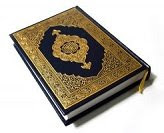
As detailed earlier in this book, the respect for the Qur'an grew rapidly after Mohammed's escape to Medina. His followers believed that Mohammed was building on the credibility of the Bible. They revered him as a Biblical prophet equal to Abraham, Moses and David. They believed the content of the Qur'an to be lofty in its laws and so beautiful in its poetry that it surpassed the many poets among the idol worshipers.
Decades after Mohammed's death, many of those who claimed to have committed his verses to memory were dying fighting for Islam. Thinking that the verses would be lost, a committee gathered and compiled the first Qur'an but a problem developed after the Qur'an was copied and distributed. A successor to Mohammed, Caliph Uthman, discovered that the copies of the Qur'an did not agree. The fact that they were different was a scandal. Uthman had a committee of a few leaders establish a standardized copy. Uthman then attempted to have all other copies of the Qur'ans burned.
The collection of sixty-one verses in this chapter reveals several things. These verses, recited by Mohammed, made lofty claims about the Qur'an. The Qur'an purported to agree with the Bible, which had been completed for centuries before the Qur'an, and commanded Muslims to believe in both the Qur'an and the Bible. It claims to be perfect Arabic, a copy of an eternal tablet in heaven, without equal in literary style and without error. The Qur'an claims to reveal hidden details to astound mankind. For example, the Qur'an announced that nineteen angels guard Hell (74:26-31). This news was expected to amaze the Christians into believing in the Qur'an.
The reasons that many of Mohammed's contemporaries did not believe in the Qur'an can be found in the text of the Qur'an itself. For example, when certain 'revelations' were changed, it caused doubt about the perfect divine source of the verses. The direction for prayers was changed from Jerusalem to Mecca with the explanation given that Allah allowed this correction to be made to the Qur'an as a test to see who would still believe in a 'divine revelation' that needed to be altered. Another example would be the verses Mohammed recited which allowed for the veneration of the daughters of Allah. These were erased and replaced by other verses with the explanation that they were Satanic verses that Mohammed received and later had to retract. For a strategic moment in time, these 'satanic verses' appeased the idol worshipers.
The Qur'an reveals several other reasons the people of Mohammed's day rejected the Qur'an. Some rejected Islam because of the manner in which Mohammed recited the verses. It looked too much like the seizures of demon-possession or insanity. Others, who knew the Bible, realized that Mohammed was reciting Arab, Jewish and Christian fables as if they were actual Biblical history. These people rejected the Qur'an because of its content.
Source: Answering-Islam.org
This is the second part of the article refuting the claims made in the Zeitgeist movie. Take a read of Part 1 first.
CLAIM 7: JESUS' LIFE STORY WAS STOLEN FROM MITHRAISM
RESPONSE:
Charlie Campbell writes, “Zeitgeist claims that the events surrounding Mithra’s life were stolen by the New Testament authors. These claims are not credible. Even the Encyclopedia Britannica concedes that Mithraism (the religion associated with Mithra) could not have influenced the Gospel writers. It states, “There is little notice of the Persian god [Mithra] in the Roman world until the beginning of the 2nd century, but, from the year AD 136 onward, there are hundreds of dedicatory inscriptions to Mithra. This renewal of interest is not easily explained. The most plausible hypothesis seems to be that Roman Mithraism was practically a new creation, wrought by a religious genius who may have lived as late as c. AD 100 and who gave the old traditional Persian ceremonies a new Platonic interpretation that enabled Mithraism to become acceptable to the Roman world” (Article entry: Mithraism 2004 edition). The four Gospels were done well before the close of the first century. If Mithraism wasn’t even known in the Roman world in the first century, as the Encyclopedia Britannica says, then it is misguided to suggest that teachings regarding Mithra influenced the Gospel writers.”
Ron Nash writes, "Allegations of an early Christian dependence on Mithraism have been rejected on many grounds. Mithraism had no concept of the death and resurrection of its god and no place for any concept of rebirth—at least during its early stages.... During the early stages of the cult, the notion of rebirth would have been foreign to its basic outlook….Moreover, Mithraism was basically a military cult. Therefore, one must be skeptical about suggestions that it appealed to nonmilitary people like the early Christians." (Christianity and the Hellenistic World, p. 144).
Ben Witherington writes, “We really do not have ancient sources on Mithra, comparable to what we have on Moses and the Israelites. Most of what we know about Mithraism comes from the NT era and later. There is no good historical reason to think Mithraism is the origins of either Judaism or Christianity.” ("The Zeitgeist of the 'Zeitgeist Movie'")
The apostle Peter wrote, "We did not follow cleverly invented stories when we told you about the power and coming of our Lord Jesus Christ, but we were eyewitnesses of his majesty. For He received honor and glory from God the Father when the voice came to Him from the Majestic Glory, saying, "This is my Son, whom I love; with him I am well pleased." We ourselves heard this voice that came from heaven when we were with Him on the sacred mountain" (2 Peter 1:16-18).
CLAIM 8: THE CRUCIFIXION STORY WAS STOLEN
RESPONSE:
Dr. Edwin Bryant, is Professor of Hinduism at Rutgers University and a scholar on Hinduism. He translated the Bhagavata-Purana (life of Krishna) for Peguine World Classics and is the author of Krishna: A Sourcebook. When asked about the claim that Krishna [a Hindu god] had been crucified, he replied, "That is absolute and complete non-sense. There is absolutely no mention anywhere which alludes to a crucifixion." He added that Krishna was killed by an arrow from a hunter who accidentally shot him in the heal. He died and ascended. It was not a resurrection. (Cited in "A Refutation of Acharya S's book, The Christ Conspiracy" by Mike Licona. The Christ Conspiracy is the source for many of the claims in Zeitgeist).

CLAIM 9: THE IDEA FOR TWELVE DISCIPLES WAS TAKEN FROM THE 12 CONSTELLATIONS OF THE ZODIAC
Joel McDurmon writes, "Zeitgeist goes on to claim that “probably the most obvious of all the astrological symbolism around Jesus regards the 12 disciples,” which, the movie states, are “the 12 constellations of the Zodiac, which Jesus, being the Sun, travels about with.” Why anyone would consider this “the most obvious” of such evidence I don’t know—I’ve never heard it until now. Were it so obvious you would expect it to be widely claimed. Further, what makes it so “obvious”? The only similarity between the two is the number twelve, for which examples can be found anywhere. The most “obvious” of these, to any “real” researcher is the twelve tribes of Israel. Since Jesus was fulfilling the Old Covenant, and was instituting the New Covenant, He was choosing the 
Dr. Ben Witherington says, “What about the claim that the twelve disciples represent the 12 constellations of the Zodiac? Well once again, Mr. Joseph [the producer of Zeitgeist] has not bothered to do his homework. There was this little entity called the 12 tribes of Israel, going back to Jacob and his 12 sons. Those stories in Genesis are not astrological in character at all, but rather are explanations of a historical origins of a people. The 12 disciples are chosen by Jesus, not because he was a stargazer, but because he was attempting to reform, and indeed re-form Israel. The twelve disciples represent the 12 tribes of Israel, and you will remember that Jesus promised that at the eschaton [Jesus’ coming kingdom] they will be sitting on 12 thrones, judging those 12 tribes [see Matthew 19:28]. Once more, this is a sort of historical and eschatological thinking, not a sort of astrological thinking, and the claim that the Bible has more to do with astrology than anything else, can only be called a category mistake. Clearly, Mr. Joseph has done no work whatsoever in the study of the various genre of Biblical literature which he could have gotten from any standard introduction to the Bible, even those written by agnostics and skeptics.” ("The Zeitgeist of the 'Zeitgeist Movie'")
CLAIM 10: HORUS WAS BORN OF A VIRGIN ON DECEMBER 25th, RESURRECTED, ETC.
Dr. Ben Witherington says, “Unfortunately it [Zeitgeist] gets most of the story of Horus wrong. He claims the Horus myth says he was born on Dec. 25th, born of a virgin, star in the east, worshipped by kings, and 
Dr. Ben Witherington says, “There was no such thing as the concept of bodily resurrection in Egyptian religion, and certainly not of a mythological deity, Horus, was not believed to have a human body. Sometimes commentators will use the term resurrection to speak loosely about an afterlife in another world, not a bodily return to this world.” ("The Zeitgeist of the 'Zeitgeist Movie'")
CLAIM 11: THE SYMBOL OF THE CROSS WAS STOLEN FROM A CROSS IN THE ZODIAC
Dr. Ben Witherington says, “Mr. Joseph [producer of Zeitgeist] thinks it [the origin of the symbol of the cross] derives from the cross in the Zodiac imposed on the circle of the 12 astrological signs of the Zodiac. 
CLAIM 12: THE WORKS OF JOSEPHUS ARE KNOWINGLY FRAUDULENT AND THEREFORE NOT GOOD EXTRABIBLICAL EVIDENCE OF JESUS' EXISTENCE

Louis Feldman, the prominent Josephus scholar and author, who is not a Christian, said, “My guess is that the ratio of those [scholars] who in some manner accept the Testimonium [to those who reject all of it as an interpolation] would be at least 3 to 1. I would not be surprised if it would be as much as 5 to 1.” (In an email to New Testament scholar Mike Licona)
CLAIM 13: THE STORY OF NOAH'S FLOOD IS PLAGIARIZED FROM OTHER SOURCES
 the world-wide phenomenon of flood stories for decades now, trying to make people realize that the flood actually happened! Now Zeitgeist comes along and tries to use this fact against us? These guys are so eager to find parallels that they haven’t stopped to think: sometimes parallels may actually work in support of the Bible, not against it. After all, if there really was a world-wide flood thousands of years ago, finding multiple traditions of the same story all over the world is exactly what we should expect. This is what we do find. Almost all these flood traditions record a universal flood in which only a tiny remnant of the population is saved. Some add the building of an ark and saving of the animals. Some recall the ark landing on a mountain; some the sending out of birds, etc. It only stands to reason that a few older legends, especially ones that remained geographically close to and close in language, might just have a similar tradition to that of the Bible. (Zeitgeist The Movie Exposed: Is Jesus an Astrological Myth?, p. 61-62)."
(1) Arguments offered to "prove" a Christian dependence on the mysteries illustrate the logical fallacy of false cause. This fallacy is committed whenever someone reasons that just because two things exist side by side, one of them must have caused the other. As we all should know, mere coincidence does not prove causal connection. Nor does similarity prove dependence.
(2) Many alleged similarities between Christianity and the mysteries are either greatly exaggerated or fabricated. Scholars often describe pagan rituals in language they borrow from Christianity. The careless use of language could lead one to speak of a "Last Supper" in Mithraism or a "baptism" in the cult of Isis. It is inexcusable nonsense to take the word "savior" with all of its New Testament connotations and apply it to Osiris or Attis as though they were savior-gods in any similar sense.
(3) The chronology is all wrong. Almost all of our sources of information about the pagan religions alleged to have influenced early Christianity are dated very late. We frequently find writers quoting from documents written 300 years later than Paul in efforts to produce ideas that allegedly influenced Paul. We must reject the assumption that just because a cult had a certain belief or practice in the third or fourth century after Christ, it therefore had the same belief or practice in the first century.
(4) Paul would never have consciously borrowed from the pagan religions. All of our information about him makes it highly unlikely that he was in any sense influenced by pagan sources. He placed great emphasis on his early training in a strict form of Judaism (Phil. 3:5). He warned the Colossians against the very sort of influence that advocates of Christian syncretism have attributed to him, namely, letting their minds be captured by alien speculations (Col. 2:8).
(5) Early Christianity was an exclusivistic faith. As J. Machen explains, the mystery cults were nonexclusive. "A man could become initiated into the mysteries of Isis or Mithras without at all giving up his former beliefs; but if he were to be received into the Church, according to the preaching of Paul, he must forsake all other Saviors for the Lord Jesus Christ....Amid the prevailing syncretism of the Greco-Roman world, the religion of Paul, with the religion of Israel, stands absolutely alone." This Christian exclusivism should be a starting point for all reflection about the possible relations between Christianity and its pagan competitors. Any hint of syncretism in the New Testament would have caused immediate controversy.
(6) Unlike the mysteries, the religion of Paul was grounded on events that actually happened in history. The mysticism of the mystery cults was essentially nonhistorical. Their myths were dramas, or pictures, of what the initiate went through, not real historical events, as Paul regarded Christ's death and resurrection to be. The Christian affirmation that the death and resurrection of Christ happened to a historical person at a particular time and place has absolutely no parallel in any pagan mystery religion.
(7) What few parallels may still remain may reflect a Christian influence on the pagan systems. As Bruce Metzger has argued, "It must not be uncritically assumed that the Mysteries always influenced Christianity, for it is not only possible but probable that in certain cases, the influence moved in the opposite direction."[22] It should not be surprising that leaders of cults that were being successfully challenged by Christianity should do something to counter the challenge. What better way to do this than by offering a pagan substitute? Pagan attempts to counter the growing influence of Christianity by imitating it are clearly apparent in measures instituted by Julian the Apostate, who was the Roman emperor from A.D. 361 to 363. (Excerpted from his article "Was the New Testament Influenced by Pagan Religions" that first appeared in the Christian Research Journal, Winter, 1994).
OTHER MISCELLANEOUS QUOTES:
Dr. Ronald Nash says, "It is not until we come to the third century A.D. that we find sufficient source material (i.e., information about the mystery religions from the writings of the time) to permit a relatively complete reconstruction of their content. Far too many writers use this late source material (after A.D. 200) to form reconstructions of the third-century mystery experience and then uncritically reason back to what they think must have been the earlier nature of the cults. This practice is exceptionally bad scholarship and should not be allowed to stand without challenge. Information about a cult that comes several hundred years after the close of the New Testament canon must not be read back into what is presumed to be the status of the cult during the first century A.D. The crucial question is not what possible influence the mysteries may have had on segments of Christendom after A.D. 400, but what effect the emerging mysteries may have had on the New Testament in the first century." (Article "Was the New Testament Influenced by Pagan Religions")
Dr. Ronald Nash says, "Many Christian college students have encountered criticisms of Christianity based on claims that early Christianity and the New Testament borrowed important beliefs and practices from a number of pagan mystery religions. Since these claims undermine such central Christian doctrines as Christ's death and resurrection, the charges are serious. But the evidence for such claims, when it even exists, often lies in sources several centuries older than the New Testament. Moreover, the alleged parallels often result from liberal scholars uncritically describing pagan beliefs and practices in Christian language and then marveling at the striking parallels they think they've discovered." (Article "Was the New Testament Influenced by Pagan Religions")
Source: AlwaysBeReady.com

